New Paper: Towards Accessible, Open, and Ethical Design-Led Digital Humanities Visualization Projects on the Web
published in Digital Studies/Le champ numérique
Abstract
This paper explores the design and material considerations for creating design-led digital humanities information visualisations using open and accessible web-based tools. It examines how we might re-approach the high-level material infrastructures of the web—the network, the code, and the browser—to facilitate openness, accessibility, and transparency.
At the heart of this inquiry is the position that code is a material of design. Rather than remaining in the domain of software engineers, code can function as an open material for building dynamic, immersive visualisations that are easily accessed and extended by others. Instead of requiring DH scholars to become expert programmers, I argue that practitioners can write and present code that speaks directly to the digitally literate. By treating code as an act of writing, and as a material creative practice, we can create robust outcomes that allow researchers to interrogate and validate the platforms they use.
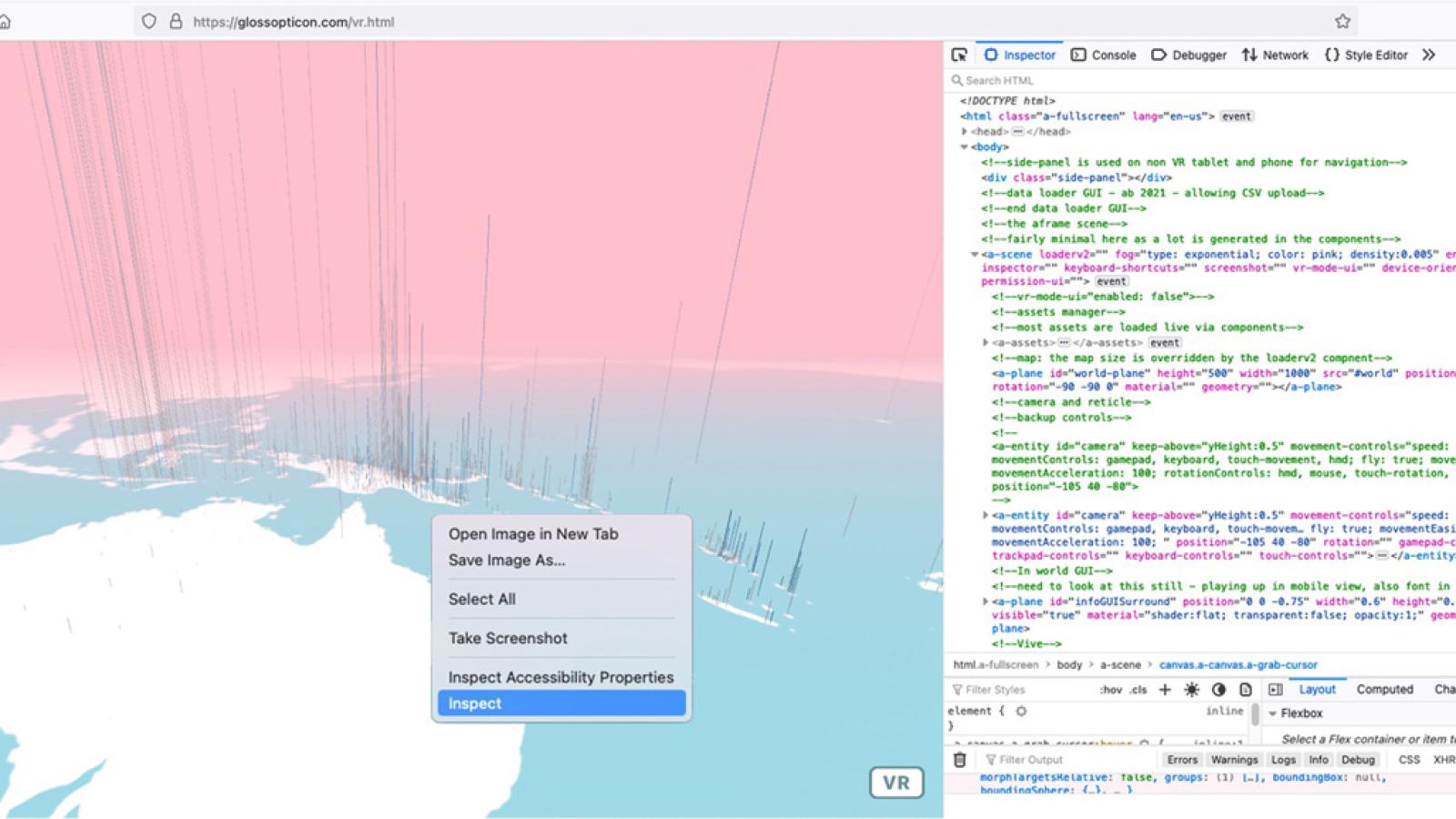
The paper uses the Glossopticon VR project as a central case study.
Publisher: Open Library of Humanities. Citation: Burrell, Andrew. 2023. “Towards Accessible, Open, and Ethical Design-Led Digital Humanities Visualization Projects on the Web,” in “DH Unbound 2022, Selected Papers,” ed. Barbara Bordalejo, Roopika Risam, and Emmanuel Château-Dutier, special issue. Digital Studies/Le champ numérique 13(3): 1–14.